However, I don't know too much about the history of London. I've a vague notion that there was a Roman settlement there, that there's a few places in London where you can see old buildings that have been uncovered. I know about the Great Fire of London and a few other odds and ends, but ultimately not a lot.
 I love London. It's my hometown and has so many possibilities. It's very safe compared to many cities around the world, it's full of arts and life and food and music and sex.
One thing that makes London very different from some of the bigger cities around the world (think New York, Chicago, Dubai, Shanghai, Hong Kong) is the fact that, until recently there weren't many sky scrapers in London. I had always assumed that this was because the planning laws didn't allow them.
I found out that I was wrong when I visited the Shard on the south side of the river. The Shard is the tallest building in Britain (and will be the tallest building in the EU before Brexit happens). At 95 storeys, it towers above the building that it replaced, Southwark Towers, which was a stubby 25 storeys high.
It turns out that the reason that London did not have skyscrapers was because of the make up of the ground. London is built on a clay soil which is not particularly strong. This meant that if anyone tried to build a tall building using traditional foundations, the building wouldn't survive long.
Around the turn of the century, a new technique was developed which involved long thin pole-like foundations under buildings. This meant that skyscrapers could be built on much softer subsoils than previously. The result is that the number of tall buildings in London has grown many times in the last few years.
What has this to do with coaching?
They say that to understand the present, you have to understand the past. They also say that understanding the past helps you to avoid the same mistakes in the future.
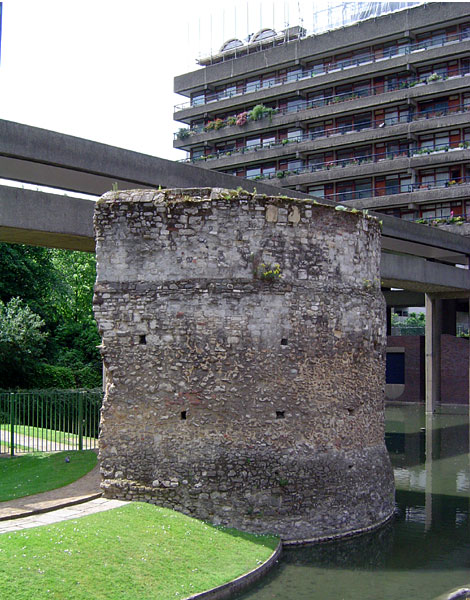
Archaeology (and specifically in this case, the history of buildings) allows us to learn about why London is the way it is. It allows us to understand why the roads are laid out as they are, why the buildings are built in the way they are. It also allows us to check where there have been problems in the past and avoid making the same in the future.
 |
| By en:User:ChrisO - English wikipedia, CC BY-SA 3.0, https://commons.wikimedia.org/w/index.php?curid=1624734 |
Architecture is about building a future. It sometimes needs a basic idea of the past, and certainly would attempt to learn from the past, but it's future-focused. An architect learns as much as they need to from the past, then imagines a new exciting future which they design and build. This is exactly the same as coaching.
When someone comes to coaching, we spend 90% of the time looking forward. I may now and then ask a past-focused question to understand why a particular option is being discounted, but we look forwards to a new, brighter future that can be built from today.
Counselling and coaching are both helping professions and are both valuable. Counselling is particularly important if you cannot move forward in life because of issues in the past (or problems in the present). Coaching is perfect when you have a generally stable foundation and want to build a new future.
Whether you want to come to terms with the past, and create a better present, or build on your present to make a better future, getting help from another person, whether a counsellor or a coach, can help you move forwards to create a brighter future.
